Pure Data
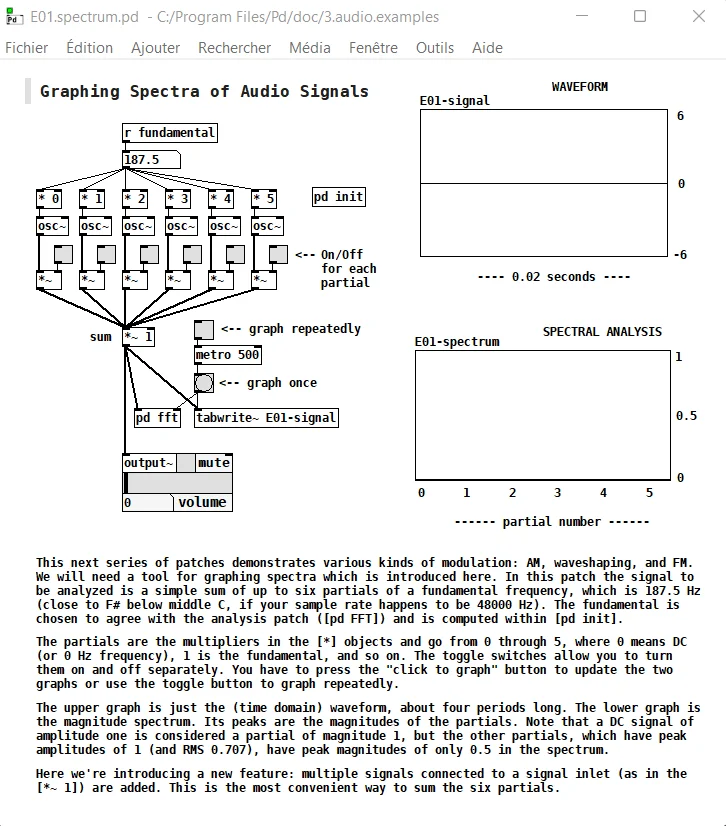
Pure Data is visual programming with boxes and cables for audio, data and whatever else you decide to connect. Small patches have a documented tendency to become spaghetti.
Programming - Visual Programming
Product information
Overview
Pure Data is the kind of software where you open an empty patch to make a tiny synth and somehow end up three hours later wiring oscillators into a network-controlled installation. Created by Miller Puckette in the 1990s, Pd turns programming into a playground of objects, messages and virtual cables. It has become a longtime favorite of musicians, sound artists, researchers and people who apparently looked at traditional programming and thought, what if the cables were the code?
Code, But Make It Spaghetti
Pd programs are called patches. Drop objects onto a canvas, connect their inputs and outputs, then watch data and audio flow through the graph in real time. Changing the program often means literally grabbing a cable and plugging it somewhere else while everything is still running. The visual approach can make signal flow wonderfully tangible, right up until the patch grows into a magnificent bowl of cables crossing half the screen. Congratulations, you have rediscovered spaghetti code and this time you can actually see the spaghetti.
More Than a Synth
Audio is only the beginning. Pd patches can work with MIDI, networking, sensors, controllers, external hardware and, through extensions, video and graphics. That has made it especially popular for interactive installations, custom instruments, generative systems and performances where a normal DAW would look at the requirements and quietly leave the room. Need a synthesizer controlled by motion sensors that talks over a network to another computer while generating visuals? Pd is already waiting with an empty canvas.
Patch It While It Runs
One of Pd's greatest pleasures is how immediate experimentation feels. Objects can be added, removed, rewired and adjusted while a patch is running, turning development into a continuous cycle of build, listen, break something, reconnect it and discover that the broken version was actually more interesting. That makes Pd unusually friendly to creative accidents. You do not always need to know exactly where the patch is going before starting. Sometimes connecting two things just to see what happens is the entire research methodology.
The Family Tree Gets Weird
Pure Data was created by Miller Puckette after his earlier work on Max at IRCAM, giving the two environments a shared history that still shows in their patching philosophy. Pd grew as the free and open source branch of that broader visual programming tradition and developed an ecosystem of externals, libraries and wonderfully strange projects of its own. Decades later, people are still teaching DSP with it, performing with it and connecting boxes together because apparently virtual patch cables remain extremely difficult to resist.
Technical specifications
- Software type
- Standalone
Minimum
No specific requirements provided.