Metasynth
MetaSynth turns images into sound. Paint frequencies, reshape spectra and discover why this wonderfully strange piece of software ended up in The Matrix sound design.
DAW - Experimental
Product information
Overview
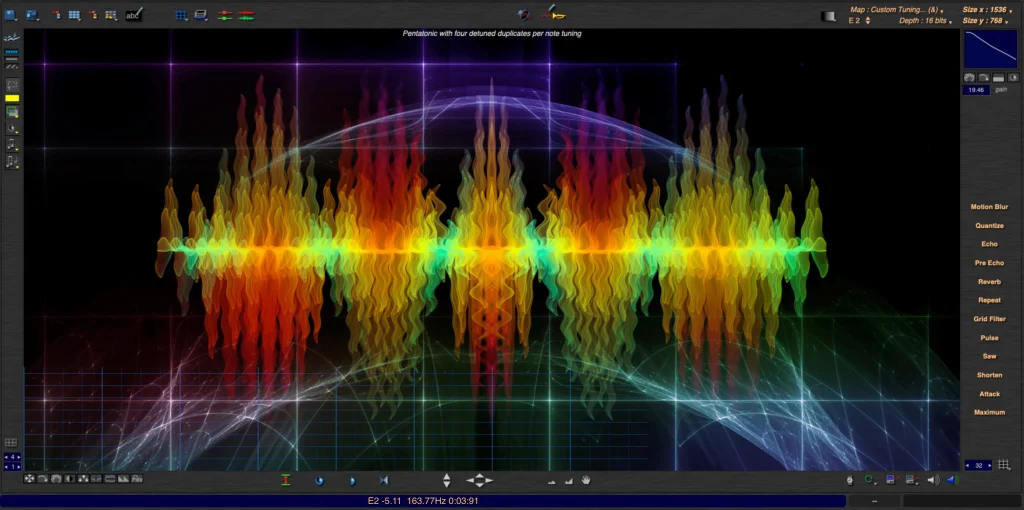
MetaSynth is what happens when someone looks at a synthesizer and decides it needs more Photoshop. Instead of building sounds only with knobs, waveforms and timelines, it lets you paint them. Pixels become frequencies, shapes become harmonics and images become playable sonic material. It is less interested in behaving like a conventional DAW than in giving sound designers a completely different way to think. Paint a texture, import an image, reshape a spectrum, process the result and see where it takes you. Sometimes that means music. Sometimes that means something that sounds like an alien transmission. Both are valid outcomes.
Paint First, Listen Later
The Image Synth is MetaSynth's signature playground. Horizontal position represents time, vertical position maps to pitch, while pixel brightness and color influence the resulting sound. Drawing is no longer decoration here. It is synthesis. That visual approach makes MetaSynth particularly good at creating textures, drones, strange harmonics, evolving atmospheres and sounds that would be tedious or downright awkward to build with a conventional synthesizer. Users often describe it as a companion to their regular DAW rather than a replacement for one. Make the weird thing in MetaSynth, export it, then return to your timeline and pretend this was the plan all along.
Take the Red Pill
If MetaSynth sounds unusually appropriate for science fiction, there is a good reason. Sound designer Dane Davis used an early version extensively while creating the sonic identity of The Matrix. According to Davis, roughly 70 percent of the sound of the Matrix code came from MetaSynth, alongside textures that helped define the digital character of the film. That is quite a legacy for software built around painting sound. MetaSynth has since appeared in the workflows of artists and sound designers connected to Aphex Twin, Daft Punk, Hans Zimmer productions, Dune, Inception and plenty more. Apparently drawing strange pictures and asking a computer what they sound like can become a perfectly respectable career.
Yes, Aphex Twin Found It
Of course Aphex Twin got involved. MetaSynth was used around the Windowlicker era, including for the famous spectral imagery hidden inside the release. Feed the audio into a spectrogram and a face emerges from what otherwise sounds like another burst of Richard D. James weirdness. It is a wonderfully backwards demonstration of MetaSynth's philosophy. The software became known for turning images into sound, then one of electronic music's most notorious experimenters used that relationship to hide images inside sound. At some point the distinction between audio software and graphics software simply gave up and went home.
Technical specifications
- Software type
- Standalone
Minimum
- Notes
- Apple Silicon or Intel Mac. macOS 10.12 or later.